
In the world of Fedar DTF printer technology, maintaining a consistent and reliable white ink supply is arguably the most critical technical challenge. Two systems are fundamental to this process: the White Ink Pump and the White Ink Circulation System. While they work in concert, they serve distinct and vital purposes. Understanding their difference is key to optimizing print quality, preventing downtime, and ensuring the smooth operation of your Fedar DTF equipment.
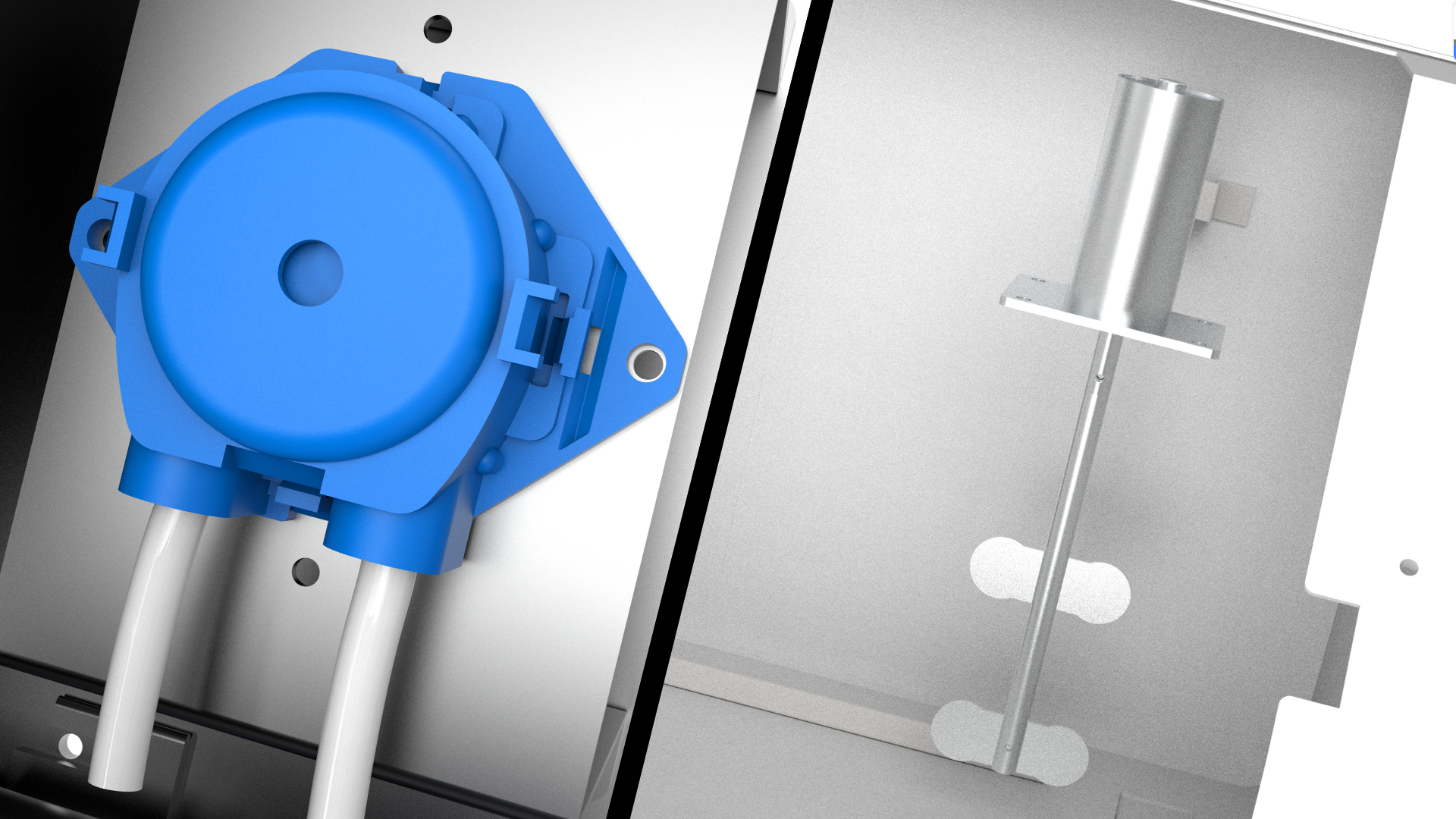
The White Ink Pump: The Primary Delivery Engine
The White Ink Pump is the core component responsible for the active delivery and pressure management of white ink from the main ink tank or reservoir to the printhead.
Primary Function: It acts as the “heart” of the white ink system, creating the necessary pressure to push the dense, pigment-laden white ink through the ink lines and into the printhead’s manifold. This ensures the printhead receives a consistent supply of ink for printing.
Key Role: Its most crucial role is maintaining stable ink pressure. Fluctuating pressure can lead to inconsistent ink drop volume, causing banding, light/dark streaks, or uneven coverage in solid white areas. A high-quality pump in a Fedar DTF printer provides the steady, pulseless flow required for professional results.
Operational Characteristic: It typically operates in a demand-based cycle, activated by the printer’s software to replenish the printhead as needed during printing and maintenance routines.
The White Ink Circulation System: The Essential Stability Manager
The White Ink Circulation System is designed for ink homogenization and stability maintenance. It addresses the natural tendency of heavy white pigment particles to settle or separate from the liquid carrier (vehicle).
Primary Function: It acts as a “stirring” system, constantly agitating the white ink in a dedicated loop or reservoir. This prevents pigment sedimentation at the bottom of the tank and separation in the lines, which are primary causes of printhead clogs and inconsistent color strength.
Key Role: Its purpose is homogeneity. By keeping the ink uniformly mixed, it guarantees that the ink delivered to the pump and subsequently to the printhead has a consistent pigment concentration from the first print of the day to the last.
Operational Characteristic: It often runs continuously or at frequent regular intervals, even when the printer is idle, to ensure the ink is always ready for production. This system may involve a separate agitator, a recirculating pump, or a dedicated loop back to the main tank.
Synergy in Your Fedar DTF Printer
In a well-engineered Fedar DTF printer, these systems are not alternatives but complementary partners:
The Circulation System ensures the white ink in the supply chain is perfectly mixed and stable.
The Pump then draws this homogenized ink and delivers it at precise pressure to the printhead.
Without effective circulation, even the best pump will deliver inconsistent ink, leading to clogs and poor print quality. Without a reliable pump, proper ink circulation to the printhead cannot occur. Fedar’s integration of both systems is designed to provide the operational reliability necessary for professional DTF production, minimizing maintenance issues and maximizing print consistency.